The Light Entertainment at the End of the Tunnel. Ridin' that train... yes, that train...

Tuesday, July 26, 2011

How to mount a linux initrd or other cpio archive

I wanted to take a look at what was inside my initrd images to see what modules they had, and figured out they were gzipped cpio archives (recent Debian system). First I unzipped it, then extracted it, and decided that I really should just be able to mount it with -o loop. Didn't figure that out yet, but I found a program
called archivemount which works well, just like mount but for archives.
The Gnome archive manager, when I clicked on the initrd, couldn't deal with the fact that it was both gzipped and and archive, but if unzipped, would display it nicely.
A page with the above info didn't appear prominently in search results; thus, for your viewing pleasure, this one.

Wednesday, August 26, 2009

Nokia bets on Linux in iPhone battle: sources | Technology | Reuters

Nokia bets on Linux in iPhone battle: sources | Technology | Reuters Been watching Maemo with interest for a while. It is Debian based, as is OpenWRT (I’m connecting via a DD-WRT repeater, but only because the crappy post-Cisco Linksys router only has 2MB Flash). http://maemo.org/intro/ Maemo could turn out to predominate over Android in the long term, especially for larger devices, given that Android at the application level is limited to the Dalvik java-variant engine, whereas Maemo appears to support both QT and GTK, and can be coded for in at least c, c++ and python, meaning it is pretty wide-open. If it makes the jump from Nokia into the mobile ecosystem at large, it could become quite interesting.

Wednesday, July 15, 2009

Inside The Great American Bubble Machine : Rolling Stone

Inside The Great American Bubble Machine : Rolling Stone: "The first thing you need to know about Goldman Sachs is that it's everywhere. The world's most powerful investment bank is a great vampire squid wrapped around the face of humanity, relentlessly jamming its blood funnel into anything that smells like money."

Thursday, May 21, 2009

Do You Know Where Your $2 Trillion Has Gone?

action.firedoglake.com | Fed 1207:
Do You Know Where Your $2 Trillion Has Gone?

Since 2008, the Federal Reserve has loaned trillions of dollars in bailout money but refuses to tell Congress where it went. Legislative action is needed.

The Federal Reserve Transparency Act would give the GAO the authority to audit the Federal Reserve and report its findings to Congress. The bill was written by Rep. Ron Paul and has 165 cosponsors, mostly Republicans.

Democratic Congressman Alan Grayson is now working to get Democratic cosponsors for this bill (see Grayson's letter here).

If you think that it's time to bring some transparency to our financial system, please endorse the bill and Rep. Grayson's letter by adding your name to the list.

Google's Rubin: Android 'a revolution' | Digital Media - CNET News

Google's Rubin: Android 'a revolution' | Digital Media - CNET News

There's probably like a royal flush of openness, where you can lay your cards on the table and say (pointing) "open, open, open, open, open," it's the guy with the most open that's going to win.

I think we're that. I think that we have an open ecosystem, we have an open-source platform, we chose the right license, there are no viral aspects, it's absolutely 100 percent free, it's complete, it's everything you need to build a phone. When you add all that stuff up, all those ingredients, potentially--I think the jury's still out--we can make a really successful product.

The Googlies clearly get it. Bye Bye MSFT, Symbian, all the other crappy proprietary phone software that lets you do very little, badly. Done. History.

Saturday, May 16, 2009

Notes on tweaking the kernel for the G1 HTC Dream

Warning: Work in progress

First, here is a handy little script for kernel-building and testing: export ARCH=arm export CROSS_COMPILE=arm-eabi- export PATH=$PATH:$PWD/jdroid/prebuilt/linux-x86/toolchain/arm-eabi-4.3.1/bin:/$PWD/jdroid/out/host/linux-x86/bin

I have a directory, android, in which is rooted the android sources, the SDK, various other odds and ends, and this script, called 'env', which I use as . ./env After doing that, I can just to 'make -j2' in the kernel-tree and have the right things happen, and fastboot and adb and so forth are in my PATH. I keep a copy of ramdisk.img there and put my built kernels, so I can try them out easily with fastboot boot zImage-2.6.27-stripped ramdisk.img

There appears to be a bunch of cruft built into the kernel wasting memory. This could just be the case for the JesusFreke build I pulled the config from, but probably most of it came from the vanilla Android. There is for example to reason to have both ext2 and ext3 compiled in (ext3 is backwards-compatible). Once 2.6.29 builds, there will be no excuse for anything but ext4, which again can mount ext2 and ext3 (via 'mount -t ext4').

Unfortunately the Wifi code appears to come from HTC as a binary module, and more unfortunately it uses symbols defined in the SLAB allocator (there is an option for a SLOB allocator which would probably be much more appropriate), and even more unfortunately is built with preemption debugging code, requiring the whole damn kernel have either preemption debugging or preemption tracing, neither of which anyone but kernel debuggers want. From include/linux/preempt.h: #if defined(CONFIG_DEBUG_PREEMPT) || defined(CONFIG_PREEMPT_TRACER) extern void add_preempt_count(int val); extern void sub_preempt_count(int val); #else

This latter is probably because I am using the HTC radio release for the Android Developer Phone (ADP). Hopefully they turn this cruft off for the G1 (I added PREEMPT_TRACER as the lesser evil and it still bloated the kernel a whole bunch).

... Oh bloody hell, the thing apparently hung trying to boot with PREEMPT_TRACER. Let's try DEBUG_PREEMPT instead...

I'm going to move this thread to my Google Site which is maybe a better place for it.

Thursday, May 14, 2009

ah rolled mah very own kernel fur mah fone

I actually rut mah fone a few days ago. Just now I finally managed to build a kernel for it. The Android system source (hereinafter '...') (not to be confused with the SDK) comes with kernel source, but by default uses a pre-built image instead of compiling it. First thing one needs to do is follow the link above and install the source.

Then one needs to follow this Building for Dream link and do what it says.

The kernel source tree comes in various different flavors, at present including 2.6.2[579]. 2.6.29 wouldn't build for me, but 2.6.27 did and booted and runs. You select a version by editing the .../.repo/local_manifest.xml file which you installed while getting ready to build your dream.

Note that these are not vanilla kernel sources: there is a lot of source in .../arch/arm/mach-msm which is not in the vanilla tree. I was able to build and load a plausible kernel from the vanilla tree, but it didn't run.

One must get a .config file and put it at the root of the kernel tree. Get it from your phone (/proc/config.gz) either by way of your SD card or by something like adb pull /proc/config.gz config.gz; gunzip config.gz adb will be in .../out/host/linux-x86/bin/ which you can add to your path via cd .../out/host/linux-x86/bin/; export PATH=$PATH:`pwd`.

Assuming you have gotten the source, you must add .../prebuilt/linux-x86/toolchain/arm-eabi-4.3.1/bin to your path, since you won't be building with generic gcc.

When everything is in place, one goes into the kernel tree and does make ARCH=arm CROSS_COMPILE=arm-eabi- oldconfig then make ARCH=arm CROSS_COMPILE=arm-eabi- all The kernel image ends up being "zimage" in kernel/arch/arm/boot

Having built the kernel and the rest of the source, one can use fastboot to load the kernel image and a ramdisk by doing something like cd /out/target/product/dream fastboot boot .../kernel/arch/arm/boot/zImage ramdisk.img which is as far as I have gotten so far. I'll worry about installing kernels later.

Ah rut mah fone

So I finally rooted my G1. Why have a phone running Linux if you can't get a root shell on it? Now I can "tether" it (use it as a Wifi router with 128-bit WEP). It's quite quick with 3g. T-Mobile understandably doesn't want people doing this too much, since it would swamp their net, so I won't abuse the privilege, but being able to get a fast connection anywhere I can get a 3g connection could be handy at times.

This guide was helpful.

Tuesday, May 05, 2009

At Annual Meeting, Pro-Israel Group Reasserts Clout - NYTimes.com

At Annual Meeting, Pro-Israel Group Reasserts Clout - NYTimes.com:
"More than half the members of the House and Senate attended Monday night’s dinner, which featured the group’s “roll call” in which the lawmakers all rise. It is a conscious — and effective — effort to demonstrate the group’s influence on Capitol Hill."

They should make them wear yarmulkas, face a wall and pray. They should all have to convert to Judaism, or be run out of office! The idea of someone in the government who might not be loyal to Israel, it makes my blood run cold! I get shpilkus!

Monday, April 27, 2009

Apple sued over iTunes workaround discussions | Apple - CNET News

Apple sued over iTunes workaround discussions | Apple - CNET News Fuck Apple! They've gotten to be as bad as Microsoft used to be, maybe worse. I hope people quit buying their stuff and send them down the tubes. Death to AAPL!

Thursday, April 23, 2009

Bruce Perens - A Cyber-Attack on an American City

Bruce Perens - A Cyber-Attack on an American City: "That attack demonstrated a severe fault in American infrastructure: its centralization. The city of Morgan Hill and parts of three counties lost 911 service, cellular mobile telephone communications, land-line telephone, DSL internet and private networks, central station fire and burglar alarms, ATMs, credit card terminals, and monitoring of critical utilities. In addition, resources that should not have failed, like the local hospital's internal computer network, proved to be dependent on external resources, leaving the hospital with a 'paper system' for the day."

Thursday, April 16, 2009

The Quiet Coup

The Quiet Coup - The Atlantic (May 2009)
The crash has laid bare many unpleasant truths about the United States. One of the most alarming, says a former chief economist of the International Monetary Fund, is that the finance industry has effectively captured our government—a state of affairs that more typically describes emerging markets, and is at the center of many emerging-market crises. If the IMF’s staff could speak freely about the U.S., it would tell us what it tells all countries in this situation: recovery will fail unless we break the financial oligarchy that is blocking essential reform. And if we are to prevent a true depression, we’re running out of time.


Thursday, April 02, 2009

IRA: AIG is a Ponzi Scheme

From the Institutional Risk Analyst:

AIG: Before Credit Default Swaps, There Was Reinsurance

....
AIG was a Ponzi scheme plain and simple, yet the Obama Administration still thinks of AIG as a real company that simply took excessive risks. No, to us what the fraud Bernard Madoff is to individual investors, AIG is to the global financial community.

....

The key point is that neither the public, the Fed nor the Treasury seem to understand is that the CDS contracts written by AIG with these various non-insurers around the world were shams - with no correlation between "fees" paid and the risk assumed. These were not valid contracts as Fed Chairman Ben Bernanke, Treasury Secretary Geithner and Economic policy guru Larry Summers claim, but rather acts of criminal fraud meant to manipulate the capital positions and earnings of financial companies around the world.

Indeed, our sources as well as press reports suggest that the CDS contracts written by AIG may have included side letters, often in the form of emails rather than formal letters, that essentially violated the ISDA agreements and show that the true, economic reality of these contracts was fraud plain and simple. Unfortunately, by not moving to seize AIG immediately last year when the scandal broke, the Fed and Treasury may have given the AIG managers time to destroy much of the evidence of criminal wrongdoing.

Monday, March 30, 2009

Geithner’s Dirty Little Secret

Geithner’s Dirty Little Secret By F. William Engdahl, 30 March 2009

US Treasury Secretary Tim Geithner has unveiled his long-awaited plan to put the US banking system back in order. In doing so, he has refused to tell the ‘dirty little secret’ of the present financial crisis. By refusing to do so, he is trying to save de facto bankrupt US banks that threaten to bring the entire global system down in a new more devastating phase of wealth destruction.

The Geithner Plan, his so-called Public-Private Partnership Investment Program or PPPIP, as we have noted previously (In German: Obamas Rettungsplan für die Banken: keine Lösung, sondern legaler Diebstahl), is designed not to restore a healthy lending system which would funnel credit to business and consumers. Rather it is yet another intricate scheme to pour even more hundreds of billions directly to the leading banks and Wall Street firms responsible for the current mess in world credit markets without demanding they change their business model. Yet, one might say, won’t this eventually help the problem by getting the banks back to health?

Not the way the Obama Administration is proceeding. In defending his plan on US TV recently, Geithner, a protégé of Henry Kissinger who previously was President of the New York Federal Reserve Bank, argued that his intent was ‘not to sustain weak banks at the expense of strong.’ Yet this is precisely what the PPPIP does. The weak banks are the five largest banks in the system.

The ‘dirty little secret’ which Geithner is going to great degrees to obscure from the public is very simple. There are only at most perhaps five US banks which are the source of the toxic poison that is causing such dislocation in the world financial system. What Geithner is desperately trying to protect is that reality. The heart of the present problem and the reason ordinary loan losses as in prior bank crises are not the problem, is a variety of exotic financial derivatives, most especially so-called Credit Default Swaps.

In 2000 the Clinton Administration then-Treasury Secretary was a man named Larry Summers. Summers had just been promoted from No. 2 under Wall Street Goldman Sachs banker Robert Rubin to be No. 1 when Rubin left Washington to take up the post of Vice Chairman of Citigroup. As I describe in detail in my new book, Power of Money: The Rise and Fall of the American Century, to be released this summer, Summers convinced President Bill Clinton to sign several Republican bills into law which opened the floodgates for banks to abuse their powers. The fact that the Wall Street big banks spent some $5 billion in lobbying for these changes after 1998 was likely not lost on Clinton.

One significant law was the repeal of the 1933 Depression-era Glass-Steagall Act that prohibited mergers of commercial banks, insurance companies and brokerage firms like Merrill Lynch or Goldman Sachs. A second law backed by Treasury Secretary Summers in 2000 was an obscure but deadly important Commodity Futures Modernization Act of 2000. That law prevented the responsible US Government regulatory agency, Commodity Futures Trading Corporation (CFTC), from having any oversight over the trading of financial derivatives. The new CFMA law stipulated that so-called Over-the-Counter (OTC) derivatives like Credit Default Swaps, such as those involved in the AIG insurance disaster, (which investor Warren Buffett once called ‘weapons of mass financial destruction’), be free from Government regulation.

At the time Summers was busy opening the floodgates of financial abuse for the Wall Street Money Trust, his assistant was none other than Tim Geithner, the man who today is US Treasury Secretary. Today, Geithner’s old boss, Larry Summers, is President Obama’s chief economic adviser, as head of the White House Economic Council. To have Geithner and Summers responsible for cleaning up the financial mess is tantamount to putting the proverbial fox in to guard the henhouse.

The ‘Dirty Little Secret’

What Geithner does not want the public to understand, his ‘dirty little secret’ is that the repeal of Glass-Steagall and the passage of the Commodity Futures Modernization Act in 2000 allowed the creation of a tiny handful of banks that would virtually monopolize key parts of the global ‘off-balance sheet’ or Over-The-Counter derivatives issuance.

Today five US banks according to data in the just-released Federal Office of Comptroller of the Currency’s Quarterly Report on Bank Trading and Derivatives Activity, hold 96% of all US bank derivatives positions in terms of nominal values, and an eye-popping 81% of the total net credit risk exposure in event of default.

The five are, in declining order of importance: JPMorgan Chase which holds a staggering $88 trillion in derivatives (€66 trillion!). Morgan Chase is followed by Bank of America with $38 trillion in derivatives, and Citibank with $32 trillion. Number four in the derivatives sweepstakes is Goldman Sachs with a ‘mere’ $30 trillion in derivatives. Number five, the merged Wells Fargo -Wachovia Bank, drops dramatically in size to $5 trillion. Number six, Britain’s HSBC Bank USA has $3.7 trillion.

After that the size of US bank exposure to these explosive off-balance-sheet unregulated derivative obligations falls off dramatically. Just to underscore the magnitude, trillion is written 1,000,000,000,000. Continuing to pour taxpayer money into these five banks without changing their operating system, is tantamount to treating an alcoholic with unlimited free booze.

The Government bailouts of AIG to over $180 billion to date has primarily gone to pay off AIG’s Credit Default Swap obligations to counterparty gamblers Goldman Sachs, Citibank, JP Morgan Chase, Bank of America, the banks who believe they are ‘too big to fail.’ In effect, these five institutions today believe they are so large that they can dictate the policy of the Federal Government. Some have called it a bankers’ coup d’etat. It definitely is not healthy.

This is Geithner’s and Wall Street’s Dirty Little Secret that they desperately try to hide because it would focus voter attention on real solutions. The Federal Government has long had laws in place to deal with insolvent banks. The FDIC places the bank into receivership, its assets and liabilities are sorted out by independent audit. The irresponsible management is purged, stockholders lose and the purged bank is eventually split into smaller units and when healthy, sold to the public. The power of the five mega banks to blackmail the entire nation would thereby be cut down to size. Ooohh. Uh Huh?

This is what Wall Street and Geithner are frantically trying to prevent. The problem is concentrated in these five large banks. The financial cancer must be isolated and contained by Federal agency in order for the host, the real economy, to return to healthy function.

This is what must be put into bankruptcy receivership, or nationalization. Every hour the Obama Administration delays that, and refuses to demand full independent government audit of the true solvency or insolvency of these five or so banks, inevitably costs to the US and to the world economy will snowball as derivatives losses explode. That is pre-programmed as worsening economic recession mean corporate bankruptcies are rising, home mortgage defaults are exploding, unemployment is shooting up. This is a situation that is deliberately being allowed to run out of (responsible Government) control by Treasury Secretary Geithner, Summers and ultimately the President, whether or not he has taken the time to grasp what is at stake.

Once the five problem banks have been put into isolation by the FDIC and the Treasury, the Administration must introduce legislation to immediately repeal the Larry Summers bank deregulation including restore Glass-Steagall and repeal the Commodity Futures Modernization Act of 2000 that allowed the present criminal abuse of the banking trust. Then serious financial reform can begin to be discussed, starting with steps to ‘federalize’ the Federal Reserve and take the power of money out of the hands of private bankers such as JP Morgan Chase, Citibank or Goldman Sachs.

Anfang_top

Wednesday, March 25, 2009

Everex XT5300T CPU Upgrade

My Everex XT5300T (the same beastie more or less is sold by OCZ as an OCZNBAN17DIYA) came with an Athlon 64 X2 TK-53. I just dropped in a Turion TL-62. I decided to note this because when I started considering trying this, Everex had nothing useful to say about it, and what little I could find on the net seemed to indicate that it either couldn't be done, or that a faster chip would probably run too hot. Hopefully other interested parties will find this post and be thereby heartened in their quest.

Let me first note that I tried a Turion RM-70. It's a nice-sounding chip, but not backwards-compatible. AMD should really call it something other than a Turion.

The Athlon TK series are sort of dumbed-down Turion TLs: they have 512K L2 cache instead of 1024K, and the TL-62 at least has five settable speeds (800 1600 1800 2000 2100), whereas the TK-53 just has three (800 1600 1700). Also, according to Wikipedia, the TK series don't support AMD-V, which probably means they are no good for virtual machines.

Judging by what baud-rate a kernel compile looks like (for those who remember back to things like 1200-baud terminals), it is quite a bit quicker, more than one would expect from an extra 400Mhz (x 2) of CPU. I figured the cache would make more of a difference than the clock speed. Another nice thing is that I've got two OCZ DDR-800 sticks in this thing, which with the old cpu, memtest86+ saw as 340MHz (DDR-681). The new chip turns them into 420MHz DDR-841. Definitely a quicker box, well worth the trouble.

The OCZ version of this laptop is a DIY thingie, meaning you are meant to finish it to your own satisfaction. While they ship it with the TK-53 cpu, they have a very nice DIY Handbook which shows not only how to add memory and disk, but also how to change the cpu. I picked up some Artic Silver Ceramique themal paste for about $2.50 and a Turion Tl-62 for $55, both from Ebay.

I was worried I might have a cooling problem (the TK-53 is listed as a 31 Watt TDP chip and the Tl-62 is 35 Watt TDP) but the Tl-62 is running if anything cooler than the TK-53 (the high-grade thermal paste may be helping with that). Judging by how cool the TL-62 is running, I'm sure I could get away with a TL-64 (not worth switching to go from 21.Ghz to 2.2 Ghz), and maybe anything up to a TL-68. If anyone tries anything faster than a TL-62, please let me know your results.

The exact chip I have is the TMDTL62HAX5DM. The DM is a later stepping than the DC, so that may be a factor in how hot or cool it runs, but probably not.

Sunday, March 08, 2009

"We are nowhere near a solution to the crisis"

FT.com / Columnists / Wolfgang Munchau - An L of a recession – reform is the way out
We are nowhere near a solution to the crisis. After committing errors of omission, global leaders are now producing errors of commission. The Americans dream about a return to a world of credit finance consumption while the Germans dream about assembly lines. In an L-shaped world, these are nightmares.


Reuters: Setback for America’s pro-Israel hawks

Setback for America’s pro-Israel hawks By: Bernd Debusmann ....

Signs are that its influence might be waning under the administration of President Barack Obama. Does that mean the days of unquestioning American support for Israel are coming to en end? Probably not.

But the furious reaction to Freeman’s appointment from some of the most fervent neo-conservative champions of Israel points to considerable concern over the possible loss of clout.

....

In the 60 years since its establishment on May 14, 1948, Israel has been by far the largest recipient of U.S. assistance, military and economic, in the world, according to the Congressional Research Service. Aid has been running at around $3 billion a year since 1985, a sizable sum for a country with a population smaller than that of New York City.

Cut off their aid, completely. We don't have the money to waste supporting a country of Neo-Nazis anymore. Enough already with the Nazraelis.

Monday, March 02, 2009

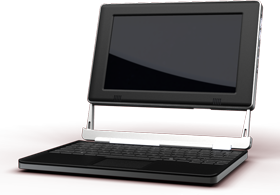
Touch Book fixing to take a bite out of the big AAPL?

Always Innovating: Introducing the Touch Book
Netbook reloaded
Until now, all netbooks were engineered the same way: Power-hungry Intel Atom, ugly case, and outdated 90's OS. Our goal: To achieve a breakthrough in both architecture and design. The result: a revolutionary device that works as both a netbook and a standalone tablet thanks to a detachable keyboard and a 3D touchscreen user interface.
Me to Always Innovating via their question form:

Hi, I'm going to watch-and-wait a bit on the Touch Book, but if you were publicly held, I'd be looking to invest.

Just add a radio to the thing and you have a "Cell Book". Maybe GSM radios will be available as dongles the way wifi and bluetooth are now.

I think you folks might be able to burst AAPL's bubble, and I hope you do.

I paid about $300 for a used G1. These days I use it without a SIM chip as a micro-tablet so I can read news in bed. Wonder how the Touch Book would work for that.

Interesting. I'll be paying attention.

Always Innovating to me:

We're definitely considering a GSM radio in the future, but right now our focus is getting the first generation out the door.

Saturday, February 28, 2009

Google's face recognition: Just Plain Creepy

Technology Review: Face Recognition: Clever or Just Plain Creepy?
This real-name tagging is what makes Google's face recognition so creepy. Remember, all these photos aren't on your computer: they're on Google's server. And because e-mail addresses are unique, Google could use the tagged photos from all its Picasa users to create a global database matching photos to e-mail addresses. Doing so would not even violate Google's privacy policy, so long as Google only uses this information to make its service "better" and does not make the database generally available.

But what's really unsettling about Google's service is that it doesn't just stop at your friends. Before you know it, Google is asking you to identify all those other faces in your photographs--the people standing in the background, the faces in the crowds, even the faces on posters. This is certainly keeping with Google's corporate mission "to organize the world's information and make it universally accessible and useful." But is that what we really want from a photo-sharing website?